
Home

Welcome

My Tai Chi Blog
Subscribe Newsletter

The Golden Lion Academy

About Us
Training Centres
Classes Lessons
Routines and Forms
Masters - Instructors

The Tradition Continues

History of Tai Chi
Philosophy

Tai Chi Training

Learn Tai Chi Online
Tai Chi Movements
Clothes and Clothing
Shoes in Tai Chi
Healing Pressure Points
Sword in Tai Chi
Train While Pregnant

Dao Yin Qi Gong

Dao Yin Chi Kung

Improve Your Health

Arthritis and Tai Chi
Benefits of Tai Chi
Stress - Anxiety
Health and Healing
Research into Tai Chi

Courageous Efforts

Reports & Events
Tournaments
Certification

Learn More

Books DVDs Courses

Keep In Touch

Contact Us
YOUR Story

Resources

Helpful Links
Privacy Policy
Site Map

[?] Subscribe To This Site

XML RSS
Add to Google
Add to My Yahoo!
Add to My MSN
Subscribe with Bloglines

Tai Chi Movements, The Walk: How to Improve Footwork in Yang Style

All tai chi beginners should learn the moves taught in the “Tai Chi Walk”. By that I mean the best way to step to optimise balance and gain steadiness. Footwork is an integral part of yang style tai chi movements, as we not only need to co-ordinate the upper and lower part of the body but also we need to be aware of substantial and insubstantial weight transfer.

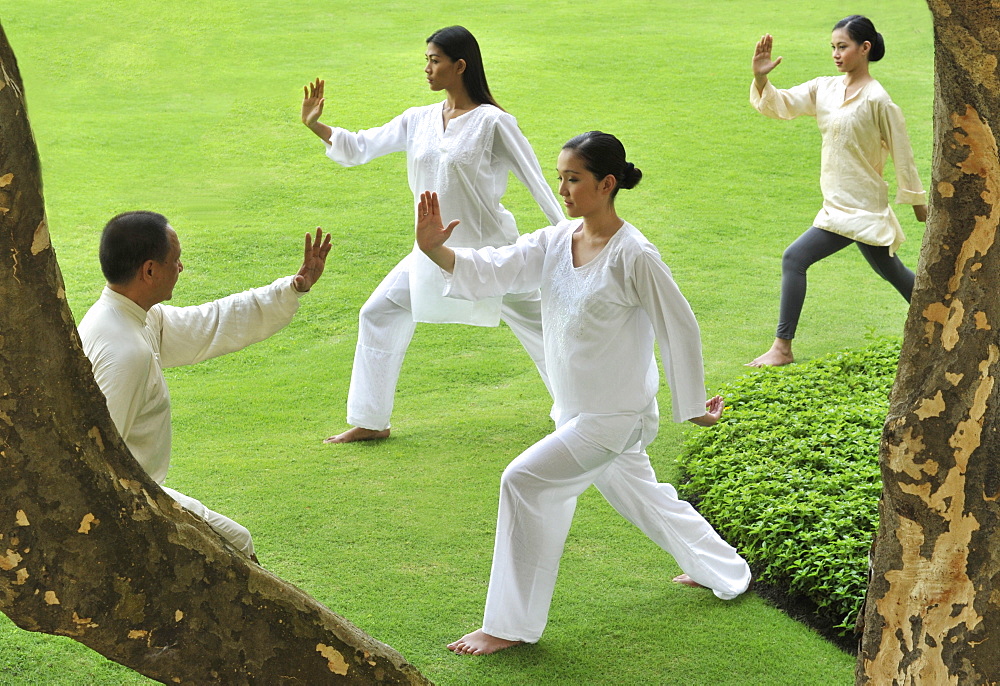
Tai Chi Movements Pictures The Walk Footwork

In practising most yang style forms, the practitioner lowers his/her centre of gravity to a “knee in-line with toe“ position. Imagine the knee touching the same vertical plane as the tip of the toes. That plane forms a 90 degree angle with the surface on which you stand. In this stance one’s weight is evenly distributed, over the sole of the weighted foot as in a “Forward Stance or Bow Stance”.

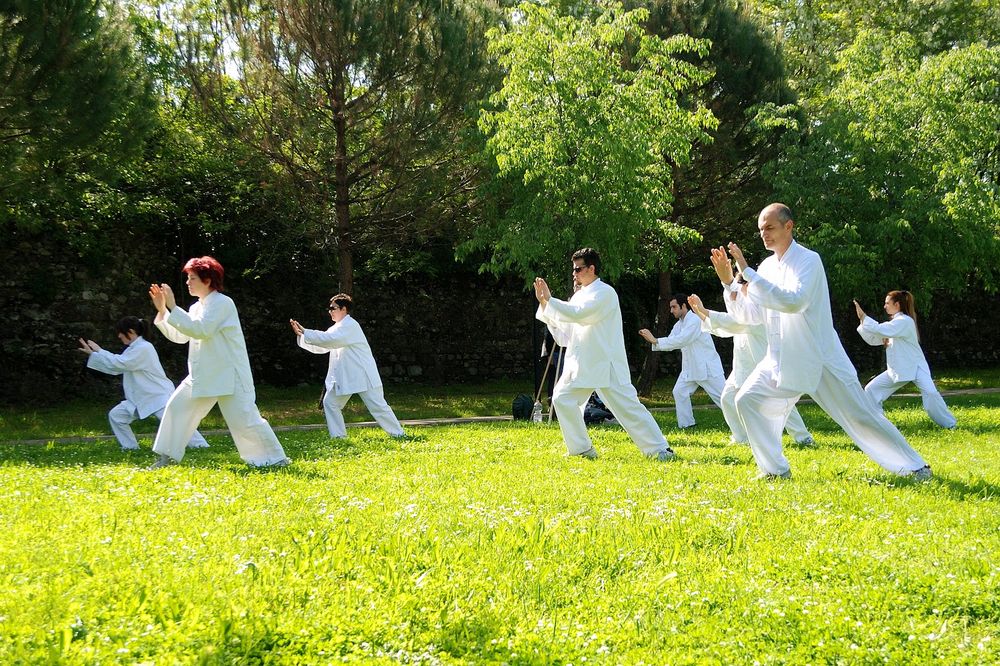
Tai Chi Yang Style Moves Footwork Pictures

When sinking the overall stance, we evenly distribute the weight over the sole of the foot, using the quad muscles to support the body’s weight. As in Tai Chi Walking, practitioners step from this lowered position, shifting weight from one leg and lifting the other, from the knee. The ankle of the lifted foot should stay relaxed. Try to imagine that the lifted leg is attached to a string, which is drawn up before stepping out. However there is one important difference in a one legged stance. For example, in “Golden Cock Stands on One Leg”, what we need to think about is, as one leg is rising, the other leg is lowering, to enable us to send chi down to the substantial leg, to the sole of the foot. This improves balance.

Whenever moving up, we need to think of our chi dropping and the “rooting” of the feet. If this is done correctly, the moving of the insubstantial leg becomes effortless.

Throughout the stepping we need to keep an eye on maintaining the body in an upright position, with the head erect, balancing the weight correctly over the substantial foot. The toes of this foot should be turning slightly outward to optimize the angle for bearing the weight, which is 45 degrees. The length taken for the stepping leg should be a natural extension of the leg in a single stride, placing the heel first, so as not to over extend the leg, which causes the weight to be shifted forward, prematurely.

After the foot is placed down, the relevant points of contact are the heel, ball of the foot and then the toes. Once again don’t move the knees over the toes as there is a risk of hyper extending the knee. With each step, we place the foot, root it and then weight it. Such a practise can be most instructive to the student, leaving no doubt to the certainty of yang style tai ji quan footwork.

If we use care while moving the knees during the movements, we can prevent undue stress and thus injury to the joints. I hope these few tips on yang style Tai Chi Walk can help improve not only your stances and footwork but give you a stronger and more stable centre, making your tai chi moves look more flowing.

Give it a go next time you train!

Contribution from Si Jie Arlene McLeod

Golden Lion Academy Training Centres:
29 Intrepid Street, Berwick, Vctoia Australia 3806
2 Laser Drive, Rowville, Victoria Ausraia 3178
98 Murrumbeena Road, Murrumbeena, Victoria, Australia 3163

Back to Tai Chi Movements

Back to Tai Chi Chuan Home Page


Print this and bring it with you to redeem

Tai Chi and Healing
Books For You

Tai Chi 24 Form

tai chi 24 form workbook

International 42 Form

tai chi international 42 form workbook

Tai Chi Yang 40 Form

tai chi yang 40 form work book

Tai Chi 32 Sword Form

tai chi 32 sword form work book

International 42 Sword Form

tai chi international 42 sword form

Dao Yin Chi Kung Qi Gong
Self Healing Exercises on DVD

dao yin chi kung healing exercises

Ageing too quickly?
New research reveals how to Reclaim your Vitality

reclaim your vitality book

Two Dragons Of Dim Mak:
pressure points for healing and martial arts

pressure points two dragons book

Superfocusing:
developing a master mind for super success

superfocusing book

Interested in
Pressure Points?

pressure points books and manuals

Interested in
Kung Fu Books?

improve your stances with this book

Want to build your own site
that gets found?

Site Build It!